Collin Velarde · Founder & AI Systems Architect

Field electrician turned AI systems builder.

I spent 20 years reading the job from the field. Now I build source-backed AI systems that can read the job with me.

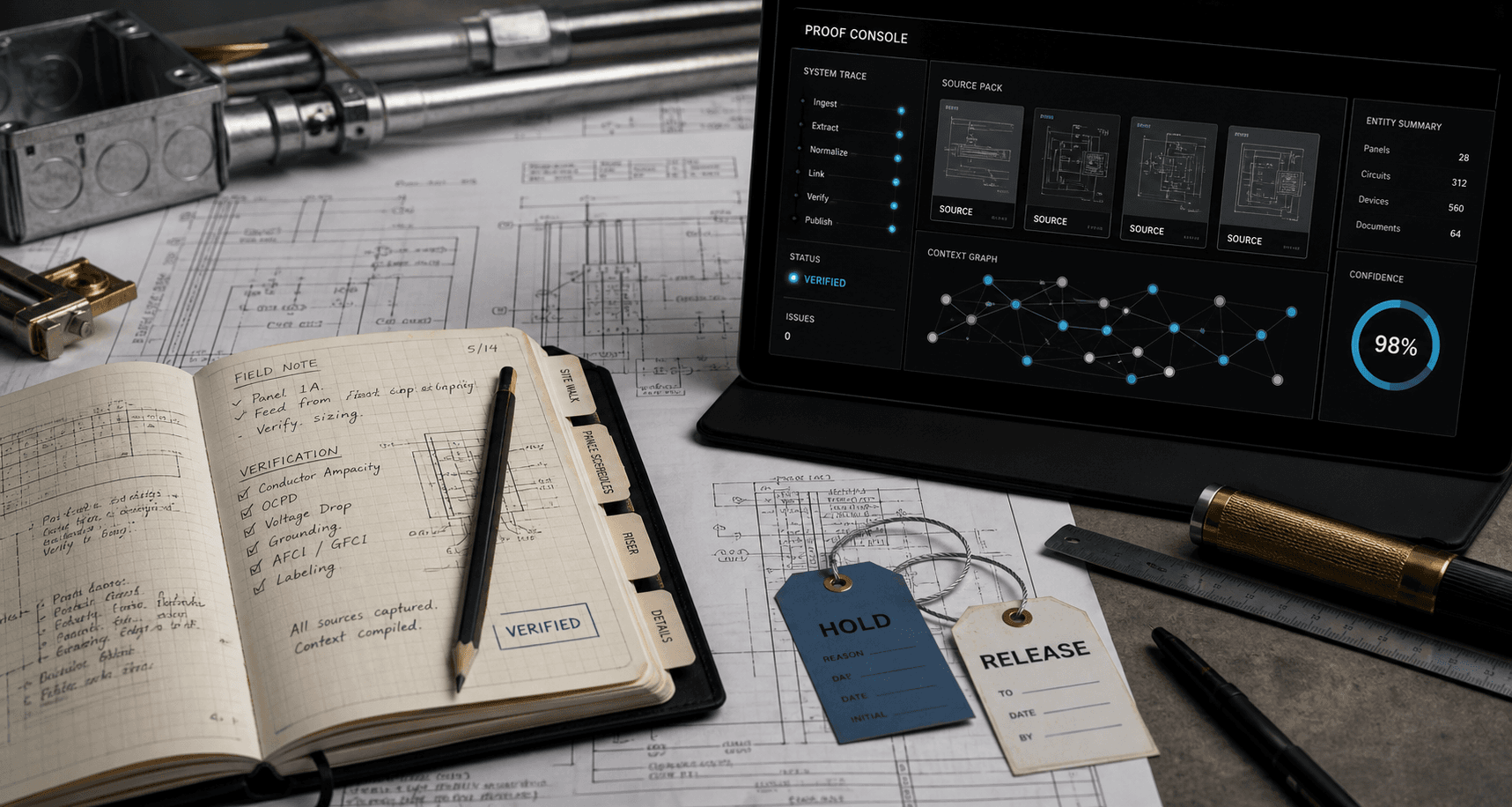
A premium work surface with electrical drawings, field notes, and an abstract AI proof console.
What I build live

Construction intelligence

drawings, rooms, and code turned into job context

Private AI systems

internal tools built on real operating data

Source-backed answers

you can check where every answer came from

Agent operations

coding agents run like a crew, not a demo
0120 years commercial electrical
02Ohmni Oracle
03private AI systems
04source-backed workflows
05agent-native operations

Featured work

Proof that the field can become software.

Three systems built from the same habit: read the job first, keep the sources visible, and ship the thing that survives real use.

See all the work

construction intelligence

Ohmni Oracle

A construction intelligence system that turns drawings, rooms, code, and field knowledge into source-backed operating context.

What this proves

Field judgment can be encoded into retrieval, review, and structured workflows without pretending the model is the authority.

Next.jsAzure AI SearchRenderOpenAIstructured ETL

retrieval and ETL

Drawings ETL / Job-Context Compiler

A pipeline for transforming drawing sets into structured rooms, systems, tags, retrieval records, and reviewable job context.

What this proves

The hard part is not parsing a PDF; it is preserving enough field context to know what should be held, verified, or released.

PythonAzurestructured JSON

private AI systems

Private Workflow Systems

Sanitized CRM, evidence, and operator workflow systems for real business processes.

What this proves

AI systems are useful when they reduce decision drag without leaking client data or bypassing human approval.

TypeScriptPythonprivate data boundaries

Field notes

Writing as a proof surface.

Notes on running real work with AI systems — written from the field, not the feed. The first essays land on Substack soon and will connect here.

Field NotesAI systemsoperator work

I Don't Vibe Code. I Run Work.

A field note on using AI to run real operating loops instead of treating software as a demo trick.

Coming soon
System NotesAI systemsretrieval

Source-Backed AI Systems

Notes on why useful AI for operators starts with sources, caveats, and reviewable outputs.

Coming soon
Drawing Guidesconstructiondrawings

Drawing Guides for Electricians

A public teaching lane for turning drawing-family doctrine into apprentice-facing field guidance.

Coming soon

How I work

A system is not useful until it survives the job.

The pattern is simple: identify the real operating pressure, preserve source truth, encode the review gate, and keep the release decision human-readable.

01

Field judgment first

Start with how the work is actually run: drawings, rooms, releases, holds, and the early catch points that save the job.

02

Source-backed systems

Keep sources, caveats, and review state visible so an answer can be checked before it becomes action.

03

Agent-native operations

Structure the work so humans and agents can inspect the same proof, metadata, and release gates.

I don't vibe code.
I run work.

Sources stay visible. Releases get a human sign-off. And my name is on the work — the same as it was in the field.

Serious operating work, not generic AI theater.

Workflow audits, private AI systems, construction intelligence pilots, and technical collaboration. If it has to survive a real job, it's my kind of problem.

Contact Collin